


Start here
Confirming the cause comes first.
- Reflux-like symptoms can have more than one cause; testing helps establish the diagnosis.
- Treatment may involve lifestyle changes, medication, or a procedure, depending on your findings and goals.
- An operation has benefits and tradeoffs. Discuss swallowing, reflux control, and recovery before deciding.
What is GERD?
The esophagus is the muscular tube that carries swallowed food to the stomach. A ring of muscle at its lower end, called the lower esophageal sphincter, works with the diaphragm and the surrounding anatomy to limit the backward flow of stomach contents.
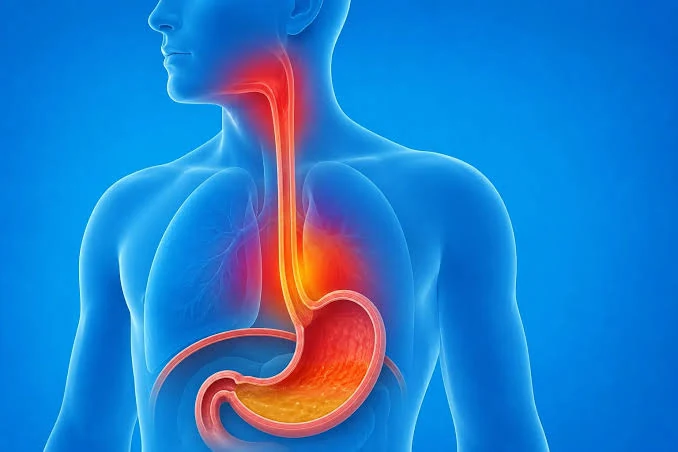
Gastroesophageal reflux disease, or GERD, develops when that barrier does not work adequately. The lower sphincter may relax at the wrong time or have low pressure. A hiatal hernia can also contribute by changing the position of the stomach and the lower esophagus.
Read more about hiatal hernias and their relationship to reflux.
What symptoms can reflux cause?
Typical symptoms
Heartburn and regurgitation—the return of stomach contents into the esophagus or mouth.
Other possible symptoms
Cough, hoarseness, asthma-like symptoms, aspiration into the airway, and chest pain may also be associated with reflux.
Difficulty swallowing needs medical assessment and should not simply be assumed to be reflux. New or unexplained chest pain also needs evaluation for causes other than GERD.[1]
Symptoms alone do not establish the diagnosis. Testing is particularly important when symptoms are less typical, do not respond adequately to medication, or an operation is being considered.
Reflux can be associated with esophagitis (inflammation of the esophagus), a peptic stricture (narrowing caused by acid-related injury), or Barrett’s esophagus (a change in the esophageal lining).
How is GERD evaluated?
Before antireflux surgery, the workup is designed to confirm reflux, assess the lining and anatomy of the esophagus, and check how the swallowing muscles work.
- Upper endoscopy
- Examines the esophageal and stomach lining. It can identify inflammation, Barrett’s esophagus, a hernia, or another explanation for symptoms.
- Reflux monitoring
- Measures acid exposure in the esophagus. Testing may use a catheter for 24 hours or a wireless capsule for 48–96 hours. pH-impedance testing also evaluates reflux events.
- High-resolution manometry
- Measures pressures and coordination during swallowing. It helps exclude achalasia or absent esophageal contractility before a fundoplication.
- Selected additional studies
- A barium swallow may help with a large hernia, suspected short esophagus, or prior surgery. A gastric emptying study may be considered for nausea, bloating, or early fullness. CT can help assess a large paraesophageal hernia.
When the diagnosis is uncertain, reflux testing may be arranged while off proton pump inhibitor (PPI) medication. Follow the testing team’s instructions rather than changing medication on your own.
Treatment without surgery
Many people manage reflux with lifestyle changes and medicines. Your clinician can help identify changes suited to your symptoms, such as adjusting meal timing, avoiding personal food triggers, raising the head of the bed for nighttime symptoms, stopping smoking, or weight management when appropriate.[1]
Antacids may help occasional mild symptoms. H2 blockers and proton pump inhibitors (PPIs) reduce acid production; PPIs can also help heal reflux-related inflammation. The choice, dose, and duration depend on your symptoms and findings. Review persistent symptoms and medication use with your care team before changing treatment.[2]
When might an antireflux procedure be considered?
Medication is part of reflux management. A PPI reduces stomach acid, and the response to medication is one factor used in evaluating a patient for surgery. An operation may be discussed when there is confirmed GERD and one or more of the following:
- Incomplete symptom control despite an optimized medical approach, especially persistent regurgitation.
- Medication intolerance or a preference to consider an alternative to lifelong medication.
- Severe esophagitis or an acid-related stricture.
- A large hiatal hernia.
- Barrett’s esophagus when the aim is better reflux control.
Typical reflux symptoms, an abnormal reflux study, and a good response to PPI therapy are associated with better surgical results. A response to medication is therefore useful information—not simply a reason to rule out surgery.
What does an antireflux operation do?
Fundoplication uses the upper part of the stomach to create a wrap around the lower esophagus, reinforcing the antireflux barrier. This can be performed through a laparoscopic or robotic approach.
The wrap can be complete or partial. The procedure is selected in the context of the anatomy and the swallowing evaluation. A partial wrap can provide similar reflux control with fewer side effects.
| Procedure | Type of wrap |
|---|---|
| Nissen fundoplication | A complete, 360-degree wrap. |
| Toupet fundoplication | A posterior partial wrap of 270 degrees. |
| Dor fundoplication | An anterior partial wrap of 180 degrees, often discussed with Heller myotomy for achalasia. |
Roux-en-Y gastric bypass is discussed as an option in patients with a body mass index of 35 or higher. A shortened esophagus may occasionally require a lengthening procedure called a Collis gastroplasty.
Not every procedure is suitable for every patient. The workup and the goals of treatment guide that discussion.
What should the decision take into account?
Antireflux surgery can relieve typical reflux symptoms and improve reflux-related quality of life. The REFLUX trial found better reflux-specific quality of life after surgery at five years, but some participants still used reflux medication. Surgery is not a guarantee that medication will never be needed again.[4]
Possible side effects include difficulty swallowing, gas and bloating, and difficulty belching or vomiting. A serious potential complication is an injury or perforation of the esophagus or stomach. The expected benefits and risks need to be discussed for the individual patient.
Planning ahead
Recovery after an antireflux procedure
Before treatment, discuss how the operation may affect eating, swallowing, belching, or bloating. Temporary changes in how you eat may be part of recovery, but the diet and its progression should follow your surgical team’s instructions.[3]
Before you go home, ask about
- Eating and drinking: the recommended diet, hydration, and when to advance foods.
- Medicines: pain control and which usual medicines to resume or continue.
- Activity and help at home: walking, lifting, work, driving, and whether you will need assistance.
- Follow-up: when to be seen, which symptoms should prompt a call, and how to reach the team.
Your care team will provide instructions for your procedure and health needs. The information here is a planning checklist, not a postoperative protocol.
Questions to bring to your consultation
- What evidence shows that reflux is causing my symptoms?
- Do I need endoscopy, reflux monitoring, manometry, or a barium swallow?
- How do my swallowing function and any hiatal hernia affect the options?
- What are the tradeoffs between continued medical treatment and a procedure?
- Could I still need medication or endoscopic follow-up afterward?
Source & further reading
About this guide
Patient education based on teaching materials by Elliot Servais, MD, FACS, and the references below. This information supports a discussion with your care team and does not determine an individual treatment plan.
Patient resources, references & image credits
Patient resources
- American College of Gastroenterology. Acid Reflux / GERD. Symptoms and evaluation.
- National Institute of Diabetes and Digestive and Kidney Diseases. Treatment for GER & GERD. Lifestyle measures and medicines.
- SAGES patient information on antireflux surgery
Research, clinical guidance & lectures
- Grant AM, et al. Minimal access surgery compared with medical management for gastro-oesophageal reflux disease: five-year follow-up of the REFLUX trial. BMJ. 2013;346:f1908.
Image credits
Fundoplication comparison illustration supplied by Dr. Servais.
Updated October 4, 2026. This guide is general information; your care team can explain which recommendations apply to you.